

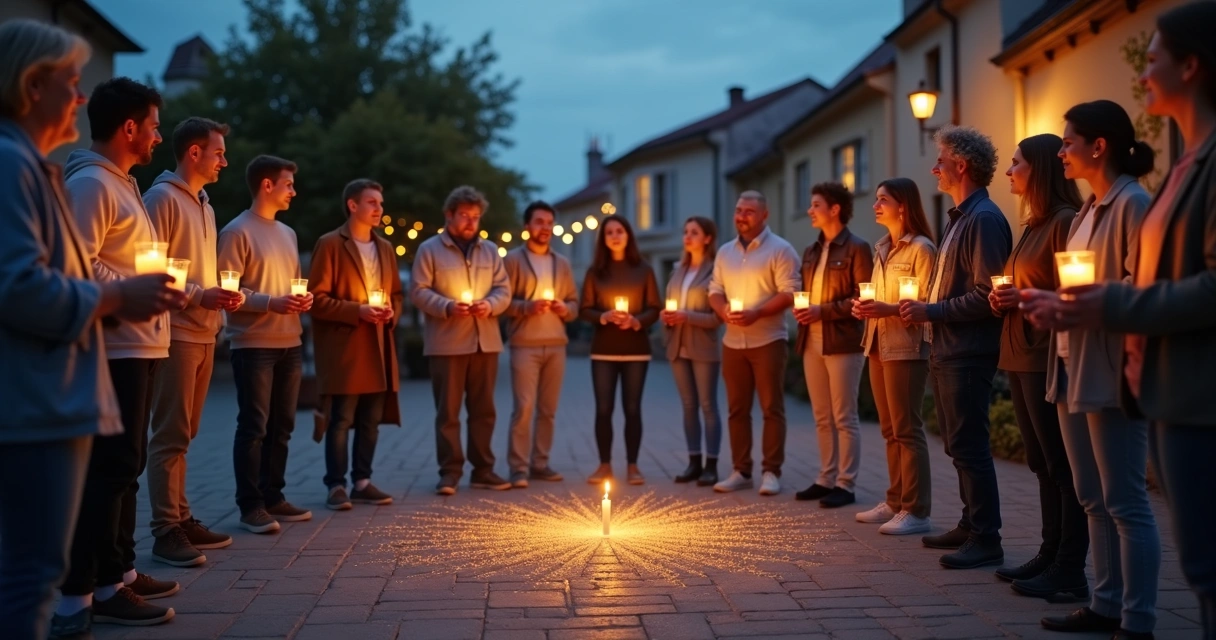
We often think of gratitude as private. A quiet thought. A journal entry. A polite thank you. Yet when gratitude becomes a shared ritual, something larger begins to happen. The mood of the room shifts. People soften. Defenses drop. Attention moves from fear and lack toward trust and connection.
Group gratitude rituals change collective behavior because they train people to notice value in one another, not just in themselves.
We have seen this in families, teams, classrooms, and support circles. At first, the practice can feel simple, even awkward. One person speaks. Another listens. A few people name what they appreciate. Then repetition starts doing its quiet work. Patterns change. People interrupt less. They judge less quickly. They become more willing to help.
This is not magic. It is conditioning. What a group repeats, it becomes.
Why shared gratitude works
When a person feels grateful alone, the benefit stays mostly inside that person. When a group practices gratitude together, the benefit spreads through relationships. It becomes social. It becomes visible. It begins to shape norms.
That matters because groups are guided by more than rules. They are guided by emotional tone, by what gets noticed, and by what gets rewarded. If criticism is the loudest pattern, people protect themselves. If appreciation becomes part of the culture, people tend to show up with more openness.
Ritual gives gratitude structure, and structure makes emotional states easier to repeat.
A ritual is not just a nice moment. It is a repeated act with meaning. That repetition teaches the nervous system what to expect. In time, people no longer wait only for mistakes. They also start scanning for goodness, effort, generosity, and progress.
What we repeat together shapes who we become together.
This is one reason gratitude rituals can rewire collective behavior. They redirect shared attention. And shared attention is powerful.
What changes inside the group
We can think of a group as a field of signals. Every sigh, silence, smile, and response tells people whether they are safe, valued, and seen. Gratitude rituals alter those signals in steady ways.
Over time, we tend to see at least four shifts:
People become more aware of each other’s effort, not only outcomes.
Conflicts lose some of their hidden charge because respect has already been voiced.
Helping behavior rises, since appreciation makes contribution more visible.
Belonging grows, because members hear that their presence has meaning.
These changes are not just personal impressions. Research gives us a useful frame. A meta-analysis of 91 studies with more than 18,000 participants found a moderate positive link between gratitude and prosocial behavior, with stronger effects when gratitude was felt as a present emotional state. We find that point especially revealing. It suggests that when a group actively generates gratitude in the moment, helping and cooperation are more likely to follow.
In plain terms, the emotional state created by the ritual affects what people do next.

The role of rhythm, synchrony, and meaning
Not all group practices have the same effect. A ritual works better when it has rhythm, shared focus, and a sense of meaning. Even small forms of synchrony can matter. Sitting in a circle, taking one breath together, speaking in turns, or ending with a brief pause can align attention.
We should not dismiss this as symbolic only. Human beings are social regulators. We take cues from one another all the time. A group that breathes, listens, and speaks with rhythm can become less reactive and more coherent.
A study on naturally occurring rituals and synchronous movement reported higher prosocial attitudes, and rituals seen as sacred were linked to higher contributions in public goods games. We read this as a sign that form matters. When people feel that a shared act has weight, they commit to one another with more sincerity.
Meaning turns a repeated action into a behavioral anchor for the whole group.
That does not mean the ritual must be formal or religious. It means people need to sense that the moment is real, not performative. Even a two minute gratitude round can carry depth if the group treats it with care.
How to build a gratitude ritual that feels true
We have seen many groups fail because they make gratitude too forced. If people feel pressured to sound positive, the ritual loses credibility. It becomes theater. Then resistance grows.
A better approach is to keep the structure simple and honest. For example, a group might gather once a week and answer one prompt: What support, action, or attitude from someone here made a difference to you this week?
That prompt works because it is concrete. It invites memory. It points to behavior. And it reduces vague praise.
If we were setting up a group gratitude ritual, we would keep these steps in mind:
Start with a fixed rhythm, such as once a week or at the close of a meeting.
Use one clear prompt that asks for specific appreciation.
Keep turns short so everyone stays present.
Allow silence and emotion without rushing to explain them.
Rotate participation so the same voices do not dominate.
We also think timing matters. Gratitude is often strongest when it follows real challenge. After a hard week, a tense project, or a family strain, appreciation lands with more depth because people know what it took to remain connected.
Common mistakes that weaken the practice
Some groups begin with good intent but turn gratitude into a duty. That usually backfires. People can sense when words are borrowed.
We would be careful with a few traps:
Using gratitude to avoid honest conflict.
Praising only high performers while ignoring quiet contributions.
Making the ritual too long and emotionally heavy every time.
Expecting instant cultural change after one or two sessions.
There is another subtle issue. Some people hear gratitude and think they must minimize pain. That is not the point. A healthy ritual does not erase difficulty. It helps a group stay human while facing it.
Gratitude is not denial. It is disciplined attention.
When gratitude and truth stand together, trust grows.

Where we notice the deepest impact
In our view, the deepest effect of group gratitude rituals is not better manners. It is a new shared identity. People start to see themselves as participants in mutual care. That changes decisions.
A team may become slower to blame. A family may become more generous in tense conversations. A classroom may become less hostile to mistakes. The ritual does not solve every issue, but it shifts the emotional base from which people act.
And that base matters. Collective behavior is shaped less by speeches than by repeated lived experiences.
When people repeatedly feel seen in a group, they tend to act with more responsibility toward that group.
Conclusion
Group gratitude rituals rewire collective behavior by changing what people notice, how they interpret one another, and what kind of conduct becomes normal. Over time, appreciation stops being an occasional gesture and becomes part of the group’s internal language.
We think that is why these rituals can have effects far beyond the moment itself. They shape memory. They shape trust. They shape how people respond under stress. In a world where many groups are held together by pressure alone, a shared gratitude practice can restore balance and conscience to the space between people.
Small act. Repeated often. Deep effect.
Frequently asked questions
What is a group gratitude ritual?
A group gratitude ritual is a repeated shared practice in which people express appreciation together. It can happen in families, teams, classrooms, or community circles. The ritual usually follows a simple format, such as each person naming one specific action, quality, or support they are thankful for.
How do gratitude rituals change behavior?
Gratitude rituals change behavior by training attention and shaping group norms. When people regularly name what they value in others, they become more likely to notice helpful actions, respond with care, and act in ways that support trust. This repeated pattern can reduce defensiveness and increase cooperation.
Are group gratitude rituals effective?
Yes, they can be effective when they are sincere and consistent. Shared gratitude can strengthen belonging, increase prosocial behavior, and improve the emotional tone of a group. The effect tends to be stronger when people feel genuine gratitude in the moment rather than repeating empty phrases.
How often should groups practice gratitude?
Most groups do well with a simple rhythm, such as once a week or at the end of a meeting. The best schedule is one the group can sustain without strain. Short and regular practices usually work better than long sessions done rarely.
Can gratitude rituals improve workplace culture?
Yes, gratitude rituals can improve workplace culture when they are specific, fair, and voluntary in tone. They can help people feel seen, reduce harshness in communication, and strengthen respect across roles. For better results, they should support honest culture, not replace honest feedback.