
We often talk about culture as if it lives only in values, meetings, and leadership habits. But in our experience, people also read culture through walls, light, sound, air, and space. A workplace teaches before anyone speaks. It sends signals all day.
The physical environment shapes how safe, seen, calm, and connected people feel at work.
That is why conscious workplace culture cannot be built only through policy. It must also be felt in the body. We have seen this in simple moments: a tense team softens after moving into a brighter room, or a thoughtful person finally speaks when noise drops and the setting feels less harsh. The space changes the behavior. Then behavior changes the culture.
Light changes more than visibility
Lighting affects mood, attention, and emotional steadiness. Harsh artificial light can make people feel tired and strained even when they cannot explain why. Natural light, by contrast, tends to create a calmer and more open tone.
A study of 444 employees on sunlight and natural elements found that direct and indirect sunlight were linked with higher job satisfaction and stronger organizational commitment, while also relating to lower anxiety and depressed mood. Direct sunlight showed the strongest link to lower anxiety. That matters for culture because anxious people protect themselves. Calm people relate better.
When people feel better in a space, they tend to respond to each other with more patience and clarity.
Good lighting does not mean bright at any cost. It means balanced light, fewer glares, and support for different tasks. Quiet focus, reflective work, and group exchange do not all need the same setting.
Layout teaches people how to relate
The layout of a workplace silently answers many questions. Can we collaborate here? Can we think here? Can we pause without guilt? Can we talk in private when something hard comes up?
A rigid layout can force one type of behavior all day. An open area may help exchange, yet too much exposure can create self-monitoring and fatigue. On the other side, too much separation can reduce trust and make teams feel fragmented.
We think conscious culture grows better when the layout supports more than one human need. In practice, that often includes:
Shared areas for teamwork and quick discussion
Quiet zones for focus and emotional reset
Private rooms for feedback, conflict repair, or sensitive talks
Simple transition spaces where people can breathe between tasks
Years ago, we watched a team hold every conversation in the same crowded room. Strategy talks, routine updates, and personal feedback all happened there. It felt efficient on paper, but people became guarded. Once the team created separate spaces for different types of interaction, the tone changed. Not overnight. But clearly.
Space gives permission.
Noise affects emotional regulation
Noise is often treated as a minor problem. We do not see it that way. Repeated sound disruption can wear down concentration, increase irritation, and reduce emotional control. People interrupt more. They listen less. Small friction grows faster.
A longitudinal study of 114 office workers over eight months found that poor lighting, thermal discomfort, and noise annoyance lowered work performance, with stronger effects in severe conditions. The path was telling: motivation dropped, fatigue rose, and people became more distractible. This is not just about output. It is about inner state.
Noise does not only disturb tasks. It can disturb self-regulation.
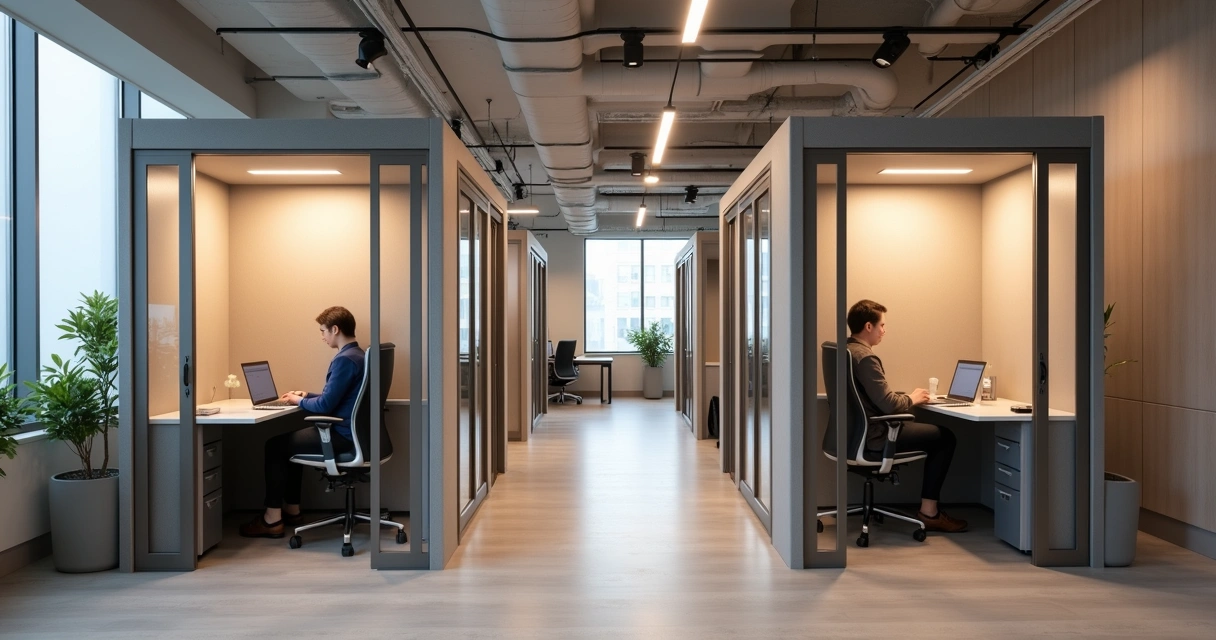
In a conscious workplace, sound deserves active care. That may include sound-absorbing materials, quiet hours, phone booths, meeting norms, and more respectful placement of shared equipment. These are not luxury choices. They support emotional steadiness.
Nature softens the social atmosphere
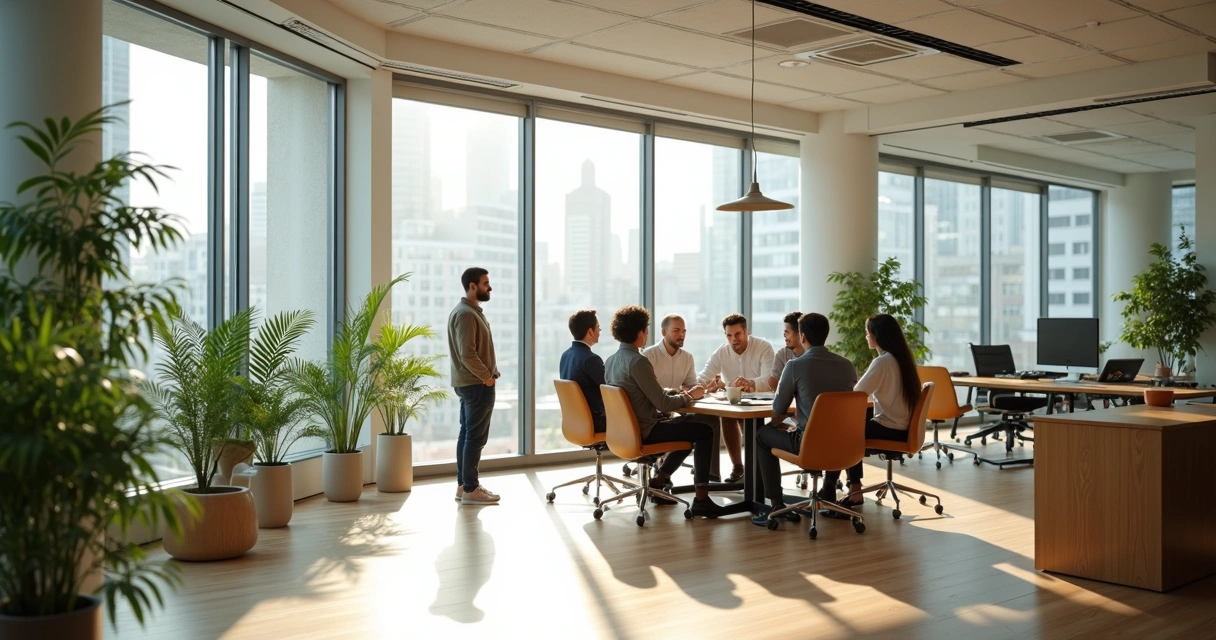
We are not separate from our sensory world. When a workspace includes natural elements, people often feel less closed off. Plants, daylight, organic textures, and outdoor views can reduce the sterile feeling that many offices create.
The same research on employees, sunlight, and natural elements also linked these features with better mood and stronger connection to the organization. We find that natural elements do something subtle but real: they lower inner hardness. And when hardness drops, communication often becomes less defensive.
This does not require turning every office into a garden. Even small moves can help:
Adding plants where people spend long periods
Opening sightlines to windows
Using natural materials and softer textures
Creating access to brief outdoor breaks
Sometimes the difference is felt in one sentence. Someone says, “It is easier to think in here.” That is not a small comment. It tells us the body has more room to settle.
Comfort supports dignity and presence
Temperature, seating, air quality, and visual comfort may sound technical, but people experience them as respect or neglect. If a person is too hot, too cold, stiff, or strained by glare, part of their energy goes into coping. Presence becomes harder.
We should not confuse endurance with maturity. A person can tolerate discomfort and still pay a hidden cost. Over time, that cost may show up as impatience, withdrawal, or mental fatigue. Culture then absorbs the result.
Another useful sign comes from a crossover study on dynamic windows and daylight conditions. Workers reported far less eyestrain, much less feeling depressed, and much higher satisfaction with daylight and outdoor views when window conditions improved. These responses show how deeply physical comfort affects mental tone.
People are more present when the space does not force them into constant adaptation.
Order and symbolism shape collective meaning
Every workplace contains symbols. What is displayed. What is hidden. Which spaces are cared for. Who gets light, privacy, and comfort. People notice these things very quickly.
If the environment is cluttered, neglected, or unequal, the message can be clear even without words. Some people matter more. Some functions deserve care. Others can make do. This weakens trust.
On the other hand, a clean and thoughtful environment suggests that attention matters. It can support fairness, shared responsibility, and mutual regard. We are not speaking about perfection. We are speaking about coherence. If a company says people matter, the space should not contradict it.
One hallway can say a lot. So can a break room. So can the chair given to one group and denied to another.
Conclusion
Physical environment is not a side topic in conscious workplace culture. It is part of the culture itself. Light affects mood. Layout shapes interaction. Noise changes regulation. Nature softens tension. Comfort supports dignity. Order communicates meaning.
When we improve the space, we do more than change appearance. We influence how people feel, how they interpret each other, and how they show up in shared life. That is why workplace design should be treated as a human decision, not only a practical one.
Culture is felt through space.
Frequently asked questions
What is a conscious workplace culture?
A conscious workplace culture is one where people, relationships, and daily decisions reflect awareness, respect, and responsibility. It values how work gets done, not only what gets done. In our view, it includes emotional safety, ethical behavior, thoughtful communication, and an environment that supports human wellbeing.
How does lighting affect workplace culture?
Lighting affects mood, energy, comfort, and social tone. Natural light can help people feel calmer and more positive, while poor lighting may increase strain and irritability. When a workplace has balanced light, people often relate with more patience and clarity.
What role does office layout play?
Office layout shapes behavior by guiding how people meet, focus, rest, and hold private conversations. A good layout supports both collaboration and quiet work. It also shows whether the workplace respects different human needs throughout the day.
How can noise impact employee wellbeing?
Noise can raise fatigue, reduce focus, and make emotional regulation harder. In noisy settings, people may become more distracted, tense, or reactive. Over time, that can weaken communication and create a more strained culture.
Is it worth investing in better workspace design?
Yes, because workspace design affects wellbeing, attention, mood, and the quality of relationships. Better design can support calm, fairness, and clearer interaction. In our experience, changes in space often lead to better cultural habits because people feel more supported in how they work together.